
Welcome to another edition of the Florida AFL-CIO’s weekly Florida Labor Letter for the week of 2/13!
Week 5 marks a significant moment as we pass the halfway point of the usual 60-day Florida legislative session. But as we’ve seen so far, it has been anything but “usual.” Before we get into the issues this week, it might be helpful at this stage to take a step back and get a broader look at the temperature in Tallahassee. Alongside revisiting our coverage of this session in previous Labor Letters (which you can find all on our website), Politico has put together an informative and insightful piece this week covering how the session is panning out at large and highlighting how little is actually getting done. We’ll let the expert reportage over there guide you through the continued relationship troubles between the three branches, but the quote worth noting is this:
“Nearly 1,800 bills and proposed constitutional amendments have been filed so far for the 2026 session. Only two bills have passed the Legislature so far.“
With that little to show in terms of general consensus, you may be asking yourself (understandably) “well then what the hell are those legislators doing up there?” If you ask them, they’ll either say they have no idea or that they all have it under control. Right.
If you ask us though, the answer is disappointingly clear: legislators are still arguing and special interests are throwing things at the wall. That said, there’s still 4 weeks left in this session, (plus a possible 2 special sessions to follow) meaning there is runway left for success and failure, though as you’ll see, it will get increasingly tighter from this point forward. What does this all means for our working families? Let’s discuss in this Special Labor Letter on crossing the Halfway Point of the 2026 Florida Legislative Session. (Readers can expect a return to the regular Labor Letter structure next week!)
🏛️The 2026 Legislative Halfway Point Report
The 2026 Session So Far (in Brief)
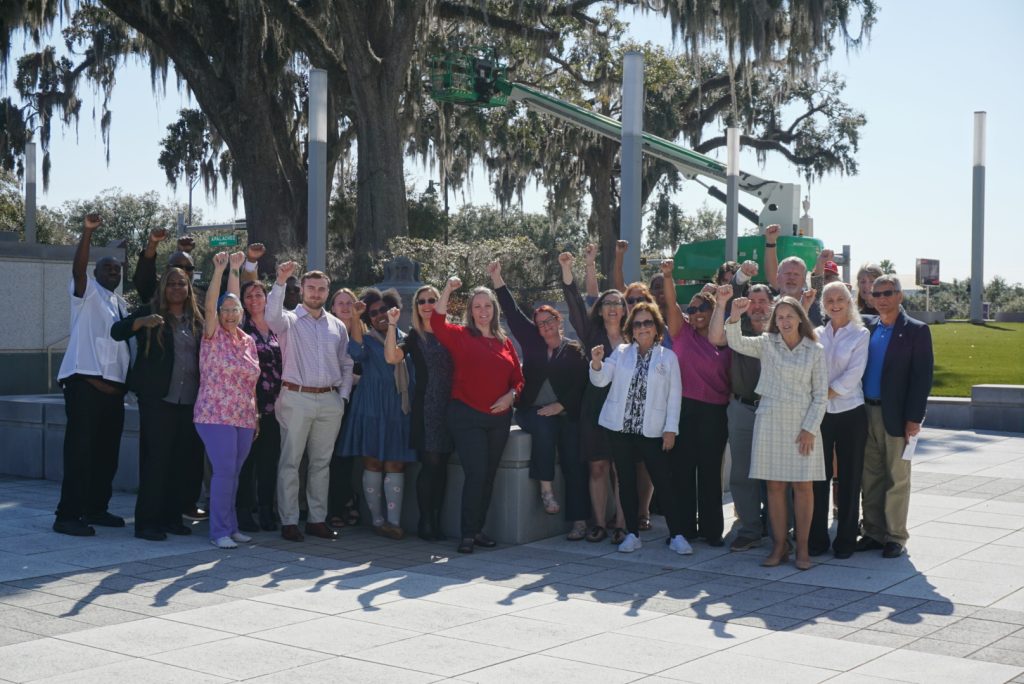
This year, from the beginning, we have seen a legislature that is much less lock-step and much more contentious than many sessions past. These are the three main features of session 2026 that have held true so far:
- Following a disastrous failed Presidential bid in 2024, this is Governor Ron DeSantis’ final legislative session before being termed limited out of office, meaning that his political influence is increasingly weaker as a result of both his lame-duck term and the fall out of his losing campaign bid (and the political allegiances forged and fractured during it.)
- The Florida House is continuing to exercise its legislative independence. Continuing the opposition hot streak that led last year into a twice extended session, The House Speaker has sought to remind the Governor and Senate that the lower house of the Florida Legislature is lower in name only, prioritizing and moving a bevy of member issues in committees, but continuing to disagree with the Governor and Senate over the direction to take the issues (like Property Tax) beyond the chamber.
- The Florida Senate is Sitting Back. Though plenty cordial, Senate Leadership so far has committed to address issues like Property Taxes, but has offered very little clarity. With mismatched budgets debuting out of sync as recently as today and a lack of cross-chamber movement of bills, the upper chamber has preferred to operate largely insular to its own committees and process as well, routinely refraining from committing to or commenting towards any strong positions on the larger issues (like property tax) until it feels it finds consensus among members (Whenever that is supposed to happen- no one knows!)
With these three conflicting positions, we have watched a session where personalities continue to take priority over policy movement, resulting in an unclear picture for everyone else, with the discord between the branches producing tons of drama, but startlingly little results for everyday working Floridians.
Instead, readers of the first four weeks of our Labor Letter will recall that deep pocketed special interests and think-tanks have so far seized the chaos to fuel a “try it all and see what works” approach to unpopular and unfriendly issues for working families. As a result, we have seen sudden appearances and (special interest co-ordinated) attacks on everything from collective bargaining for both private and public sector workers, unpopular culture war bills, and even the policing of views and freedom of expression.
Strategies Change in the Second Half (In Brief)
As mentioned, Week 5 marks just past the midpoint of session, which means a re-evaluation of priorities is beginning to take place on Florida’s Capitol Hill. Here is why:
Traditionally, as the legislature moves into the last 4 weeks of session, the constitutionally required state budget (General Appropriations Act) begins to take on an increasing role in legislative business. As the only bill the legislature must pass in the 60-day session, negotiations on the budget between the chambers and agencies will occupy increasing time and focus for lawmakers in the coming weeks, forcing committee and chamber leadership to take a hard look at how best to use their remaining session time elsewhere to finish up their priorities.
When leadership priorities are aligned, sessions can move with brutal efficiency. This happened in 2023, when horrible bills like SB 256 were greased by shared political ambitions, moving in unison through all three branches as the result of the lock step relationship between the chambers and the governor.
When leadership priorities are not aligned as clearly (which is usual) or are oppositional and unclear (which is not usual and is the case this year), legislators use the second half of session to negotiate and re-prioritize the issues to be taken up in the remaining time, because unlike viewers of a good football game, legislators hate to be in overtime with an extended session, particularly in election years when they could be campaigning and fundraising.
This annual priority shift regularly leads to the death of all non-priority bills in session as decided by chamber and committee leadership, starting with those that have seen little momentum in the first half of session (meaning they have either stalled in between committees or have yet to even be debuted at their first committee of reference.) As bills get weeded out, the negotiations among legislators to keep certain issues alive crystalizes what actually has a chance of reaching the finish line before Sine Die.
For Working Families in Week 5
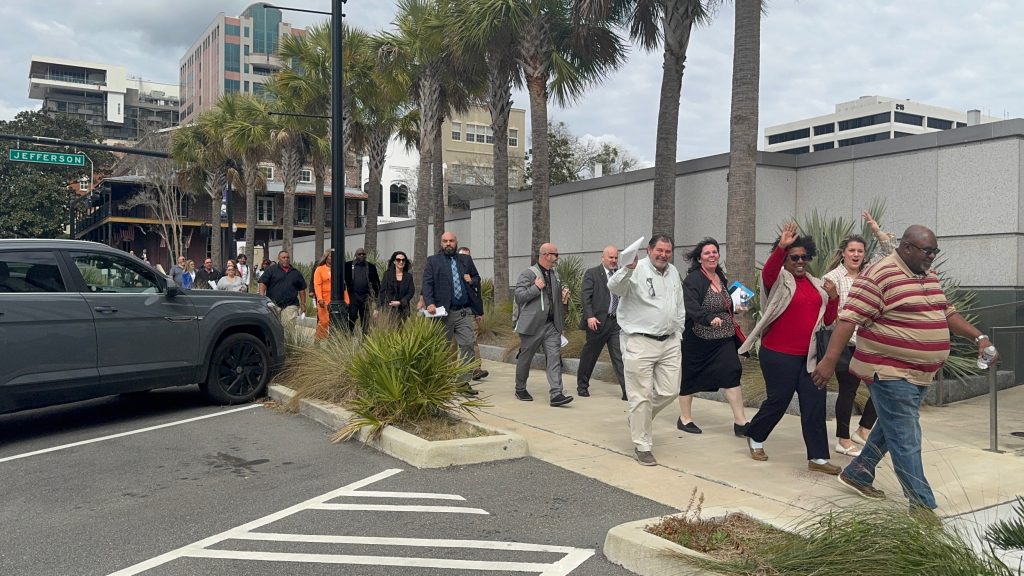
What does this environment mean for our working families? Well in terms of outcomes it could still mean anything. As put so eloquently by the House Speaker preceding the State of the State: “Honestly, I don’t know what is going to happen this session.” But in terms of strategy, the halfway point and beyond present a great deal of opportunity for our unions to help clarify to this directionless legislature where working families really need it to steer, and which issues ought to be left by the wayside and on the increasingly large cutting floor.
Corporate interests have taken a similar approach so far, as evidenced by last week’s sudden awakening of once thought dormant culture war and union busting bills found themselves suddenly with hearings and cross-chamber activity. Thankfully, your WFLC Family in Week 4 kept their cool, responding quickly and ensuring that nothing that sprung up got passed without a say from working families.
In Week 5 though, the Working Family Lobby Corps came prepared and eager to go on the offensive against these bad bills, re-setting the agenda and narratives on worker’s issues and more for the coming weeks. Por ejemplo:
- Public Sector Union Busting (SB 1296/8 & HB 995/8)
- Readers from the previous weeks know we’ve been tracking these unfriendly and anti-labor public sector bills since they first appeared in the House in Week 3. Despite their initially slim odds following the Temporary Postponement (TP) of the Senate bill out of the gate, Working Families in Week 5 walked into the revelation of a Proposed Committee Substitute set to revive the bill in its first Senate stop this past Wednesday to give it greater chance to cross the finish line.
- Thankfully, the billionaire backed think-tanks that got this bill on the move again were simply not prepared for the show of solidarity and smarts displayed by working families in committee this week. After spending minutes studying false talking points on our Teacher’s Unions, the bill sponsor, Senator Martin, flummoxed the bill’s opening debut, struggling to provide answers to basic questions such as who the bill impacted, staff analysis that questioned the bill’s unconstitutionality and justifications for its unreasonable guardrails against unions. With the WFLC bringing in testimony from others impacted like transit and postal workers to join our teachers, this committee was a rare and powerful demonstration of what smart, passionate, and consistent advocacy can do to change the narrative surrounding policy in real time. Make no mistake, though this bad bill was pre-arranged to be voted up on, it’s future is in jeopardy. You can watch this entertaining and powerful committee on The Florida Channel (Starting at 34:30)
- Private Sector Union Busting (SB 1236 & HB 1387)
- Though the Senate version of this bill was clearly damaged thanks to education provided by the WFLC members in committee last week, the House version of this unfriendly anti-union bill pushed through into it’s second committee this week. Though the bill sponsor has been holding an open door policy to conversation, this bill continues to be a dangerous presence for our private sector siblings. WFLC members were quick to illuminate the hypocrisy of passing legislation that polices how small businesses operate while also claiming to be the business friendly “Free State of Florida.” With the Senate companion stagnating, continued advocacy like ours in the House Chamber is influential in communicating to the legislature that this bill should not move to the governor’s desk. We are continuing to aggressively track this issue moving forward.
- Ideologies Inconsistent with American Principles (SB 1632 & HB 1471)
- The Florida House has shown plenty of appetite this year for Orwellian policy and the re-ignition of the Culture War, with HB 1471 finding increasing passage and co-sponsorship through its second committee stop this past Tuesday.
- A reminder: This unfriendly and ominous bill creates the new and un-elected position of “Chief of Domestic Security” who would have the ability to designate any organization a “domestic terrorism organization” that seeks to “coerce a civilian population” or “influence the policy of a government by intimidation or coercion.” With a long and important tradition of public activism aimed at influencing and intimidating unfair big business or anti-civil rights practices across history, American Labor is just one of the areas significantly under risk of being identified as participating “in Domestic Terrorism” under this vague and dangerous bill. We are continuing to monitor this bill as it approaches the House Floor and could slow down in the Senate.
- Progress on Amending the Labor Pool Act (SB 1112 & HB 1287)
- This Wednesday, this good and friendly bill flew through it’s second Senate committee stop with once again universal positive reception by committee members. As a piece of legislation that simply helps open the door for those workers who are formerly incarcerated, seasonal, or just trying to get a foot in the door, this bill reminds us that working class issues are not ones that divide by a party line or by anything else and instead reflect a shared common goal to live a better and more meaningful life.
- In the same way that our continued opposition on bad bills communicates its lack of strength to get through both chambers, our continued support for good bills does just the opposite, and with this important continued Senate enthusiasm, we hope to emphasize the bill’s strength in the House to guarantee its final passage.
The Road Ahead (Week 6+)
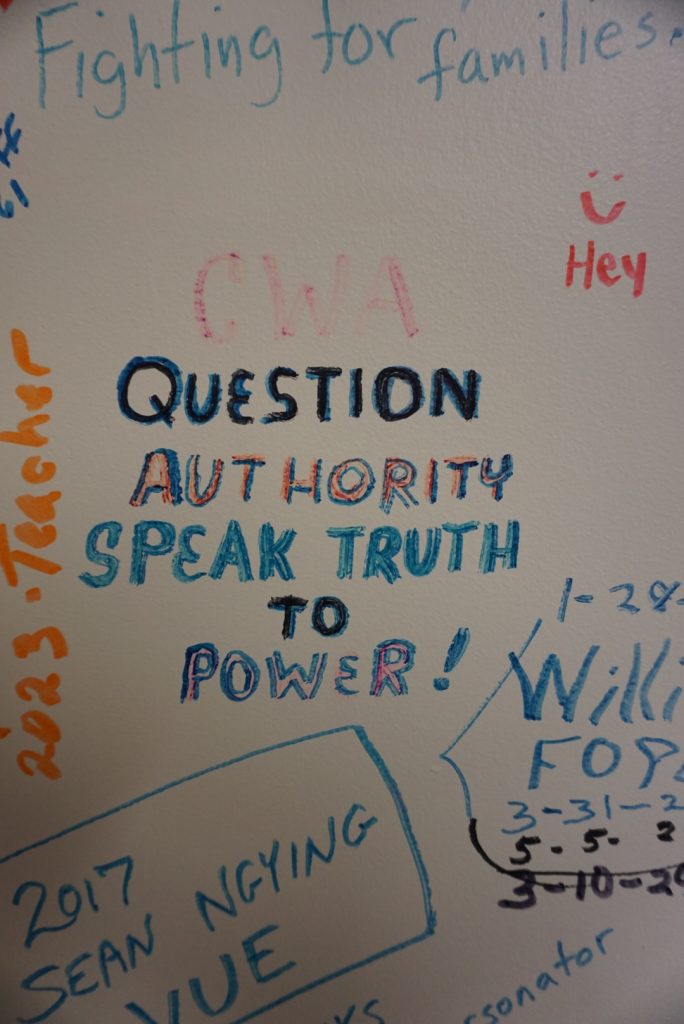
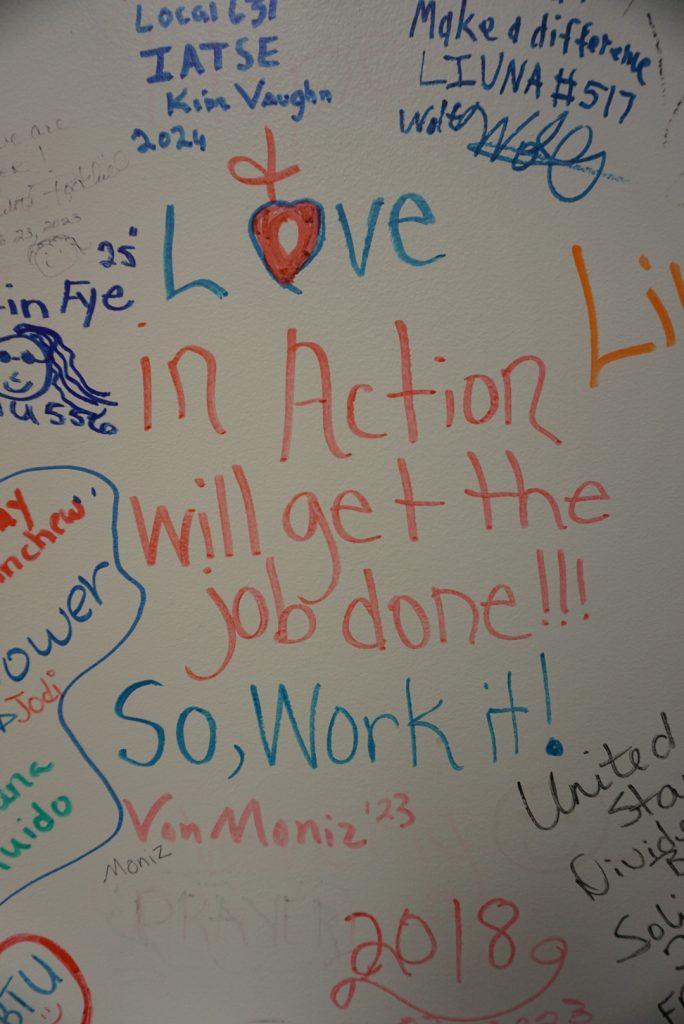
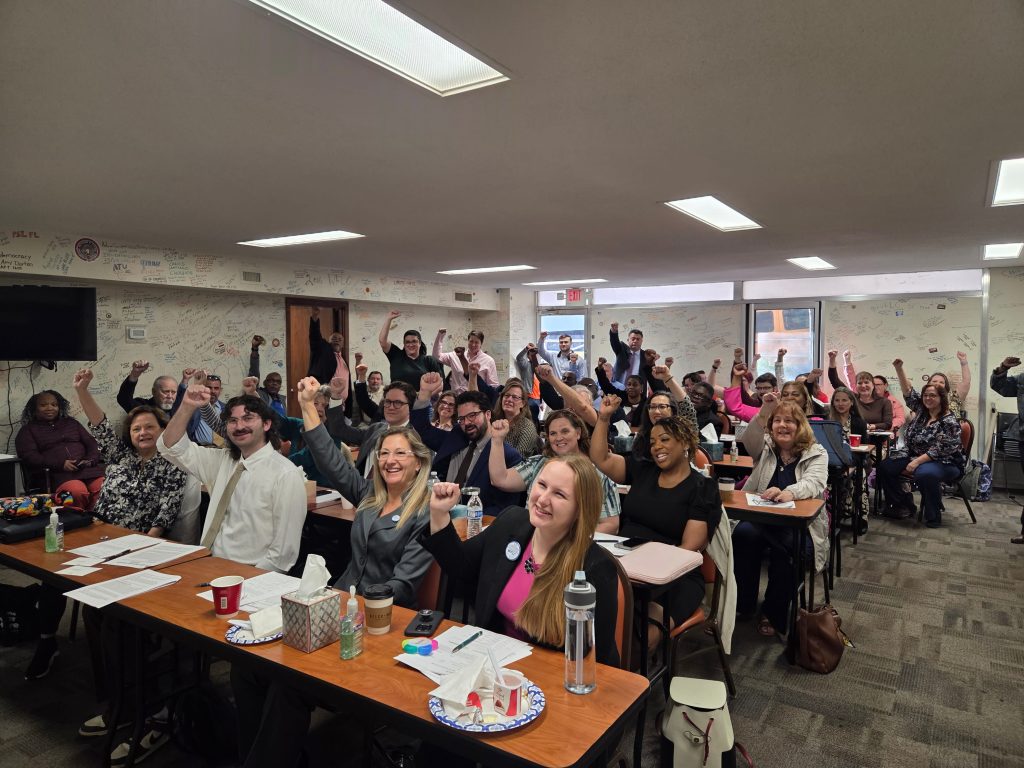
As mentioned, we really can’t predict the direction this session will go, as so many factors are still up in the air. But in all the fog lies a number of opportunities for clarity and the potential for progress on the issues most important to Florida’s Working Families. As the budget forces its way into the spotlight, your FL AFL-CIO and Working Family Lobby Corps are very hard at work looking to make sure that the things most important to you are kept in the conversation, and to find a way to put a nail in the coffin to the opportunist interests that oppose good unions. We are encouraged each morning by the signatures that surround our Working Family Lobby Corps room- a legacy of members and workers who have and continue to blaze this trail for us each year, and who show that there is power in the voice of the people, and momentum in a movement like ours.
In the wise and immortal words of Basketball legend Kobe Bryant, “job’s not finished” and so the work continues.
🗓️On the Horizon (Session Edition)
- March 13th – Sine Die for the Regular Legislative Session
- As we approach this date, the pressure will be put to the legislature to end on time after last year’s multiple extended regular session. This will be doubly important given that it is an election year, and so long as legislators are in the building, they are unable to spend their time on or participate in Fundraising for their re-election campaigns.
- April 20th – April 24th – Congressional Redistricting Special Session
- As announced earlier this year, the Governor seeks to convene the legislature back in April for an attempt at redistricting and gerrymandering the state’s congressional districts, despite it not being a census year. Despite a lack of hard enthusiasm by legislators, we will see if the appetite for this issue grows beyond his office closer to April, as relationships continue to evolve during regular session and the U.S Supreme Court waits to make the final the decision on Louisiana v. Callais, an important case on the influence of race and party on congressional redistricting.
Bonus Bulletin – In Memoriam
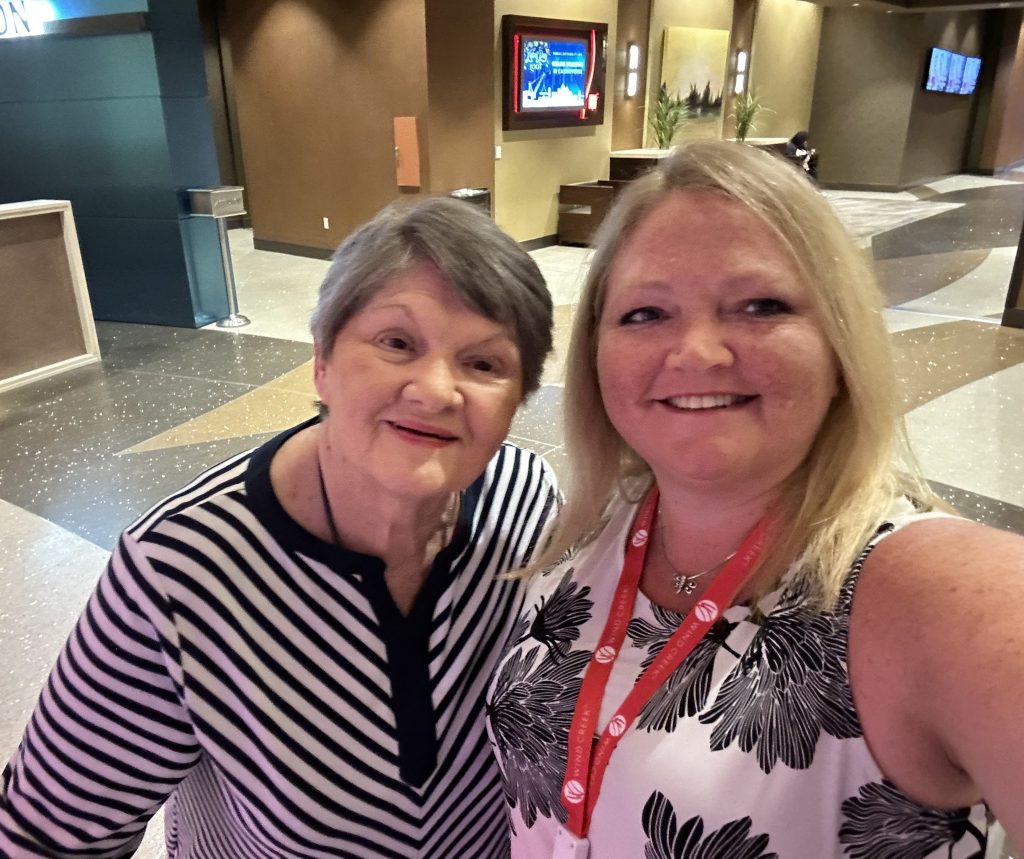
As we mentioned, our FL AFL-CIO family is one with a great deal of support and history behind it. As such, we wanted to take a moment in memoriam this week as well. Our longtime former Executive Assistant, convention planner, storm relief organizer, singer of karaoke, friend and FL AFL-CIO family member, Helen Parker, lost her mother this week in Tallahassee.
Virgie Merle Bruce Parker, age 84, passed away peacefully on February 7, 2026, at her daughter’s home in Tallahassee, Florida. A devoted wife and mother with a strong will, Virgie showed her love through caring for others. She enjoyed canning and freezing fresh local vegetables and was an enthusiastic sports fan, especially of Florida State University athletics. She had a special talent for working with flowers and made wreaths as a labor of love, donating more than 100 wreaths to residents at CenterPoint Nursing Home to brighten their days. Many of these wreaths also found homes with members of the Florida AFL-CIO family, with whom she made friends with frequently. Virgie’s love, strength, and generosity will be deeply missed and forever remembered and we extend our condolences to her family.
The Parker family is working to raise critical funds for VITAS hospice in Virgie’s name, to care for other patients and their families. If you are able, you can help contribute by making a donation at https://vitascommunityconnection.org/
That concludes this special write up for your Florida Labor Letter. Until next week, in Solidarity.
Got any tips, actions, or messages you’d like to see in this email?
Please email Daniel Diaz at ddiaz@flaflcio.org